UNESCO Chair on
Health, Race
and Human Rights

Read the announcement

Health inequalities among racialized groups are a widespread concern globally. Major contributors to health disparities between racialized and non-racialized populations include poor access to social determinants of health, including education, employment, and housing. Among health determinants, structural racism and discrimination have been shown to have significant impacts on morbidity and mortality—impacts that vary based on racial identity. In addition to these factors, law and legal institutions—which have a pervasive influence in shaping racial identity and the experiences of racialized individuals—constitute major determinants of access to various social goods.

Recognizing law’s consequential role in advancing several Sustainable Development Goals—including good health (SDG3), gender equality (SDG5), reducing inequalities (SDG10), and achieving justice, inclusion, and access to justice (SDG16), the Chair on Health, Race and Human Rights will develop a comprehensive program of research and action to study the role, promises and limits of law as a tool for addressing health disparities and guaranteeing equitable access to healthcare for racialized populations.
As part of this program, the Chair will study, map and theorize how racism, as a socio-legal condition, intersects with other social determinants of health to produce, shape, and perpetuate poor health outcomes among racialized people internationally. The Chair will study the factors impeding development and implementation of effective normative legal standards on anti-racism, including the impact of regressive racial politics and political ideologies on the health and human rights of racialized populations. With the goal of advancing anti-racism strategic plans, the Chair will strengthen educational partnerships in research, teaching, and networking between the Global North and South, as well as advance North-South-South cooperation on critical global healthcare challenges, including effective governance, infectious diseases management, reproductive health, mental health, access to medicines and vaccines, and equitable access to, and development of, new digital health technologies.


It is a privilege to embark on this important journey through the UNESCO Chair on Health, Race and Human Rights, and to advance collaborative work at the intersection of equity, justice, and global health.

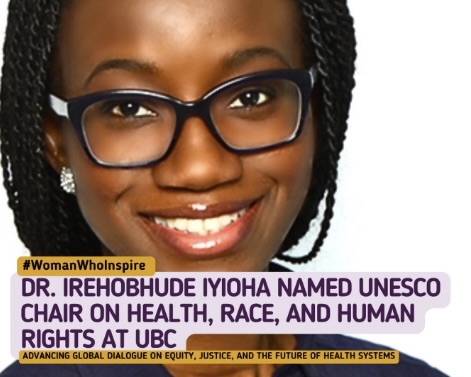
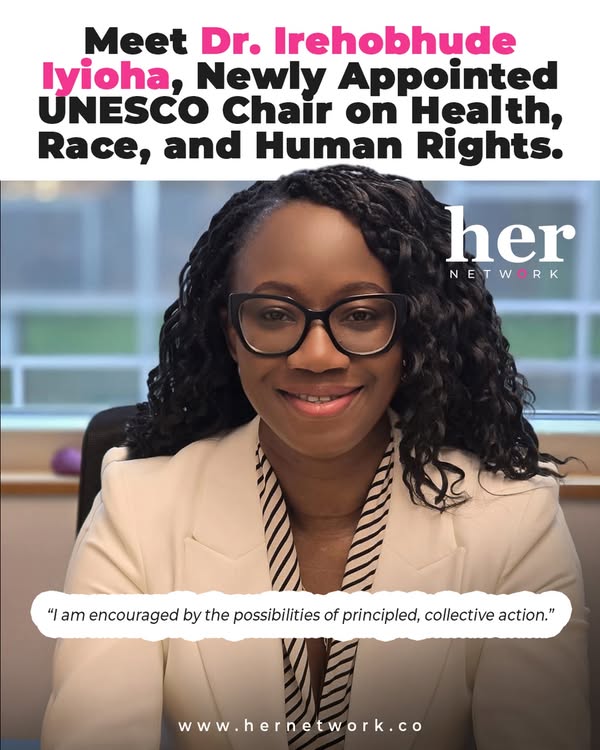
Dr. Irehobhude Iyioha O. Iyioha, LL.B., BL., LL.M., Ph.D. ·  UNESCO Chair
Dr. Irehobhude Iyioha seated

First ever UNESCO Chair hosted at the University of British Columbia

The first UNESCO Chair established in a law school in Anglophone Canada

Only the second Chair to be hosted by UNESCO in a law school in Canada

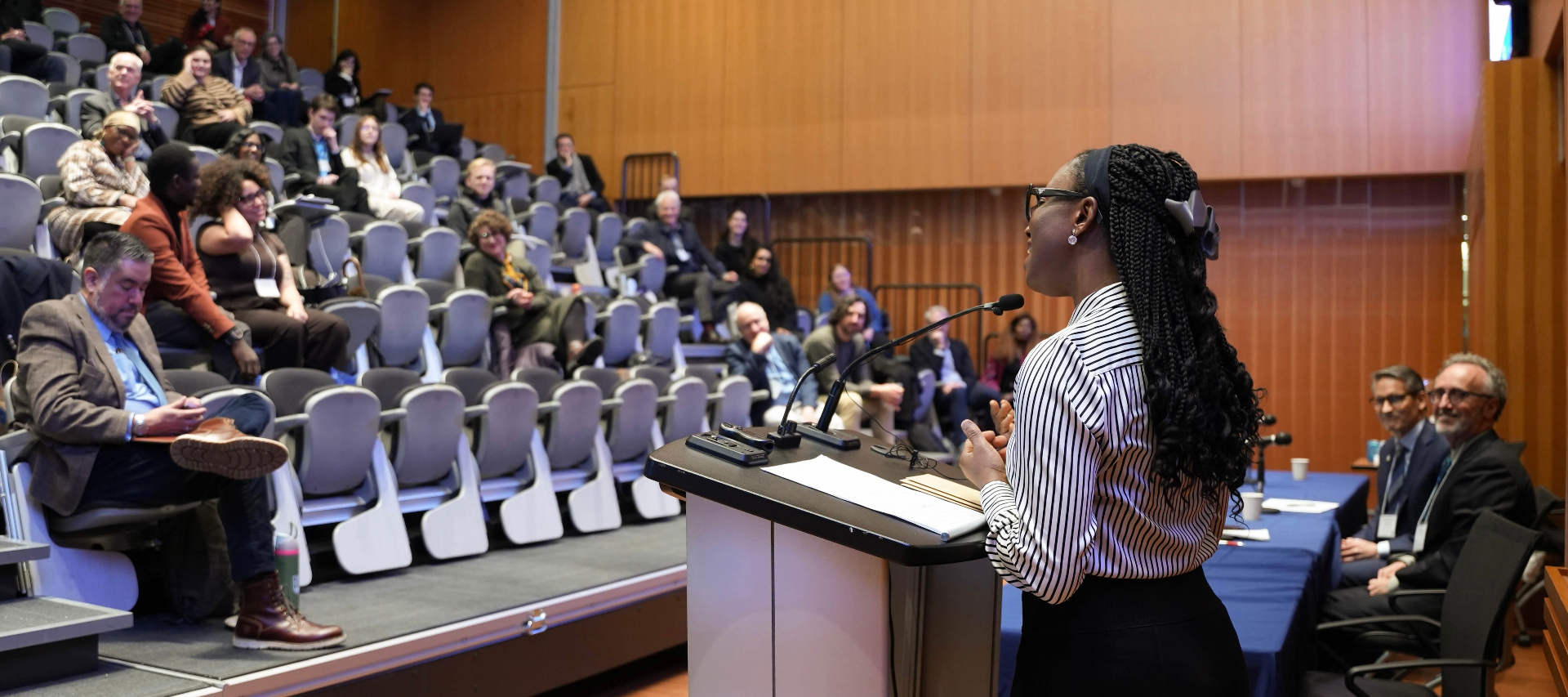
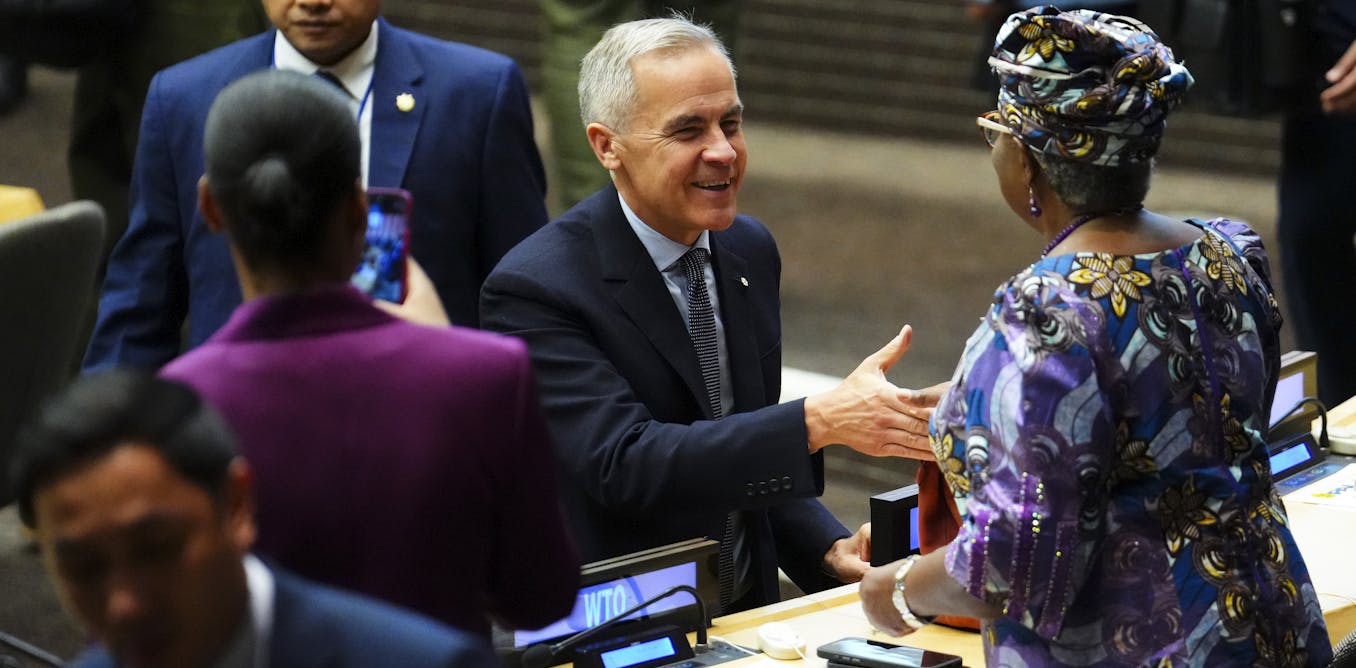
Dr. Iyioha shaking hand
Dr. Iyioha group photo
Dr. Irehobhude Iyioha O. Iyioha, LL.B., BL., LL.M., Ph.D.

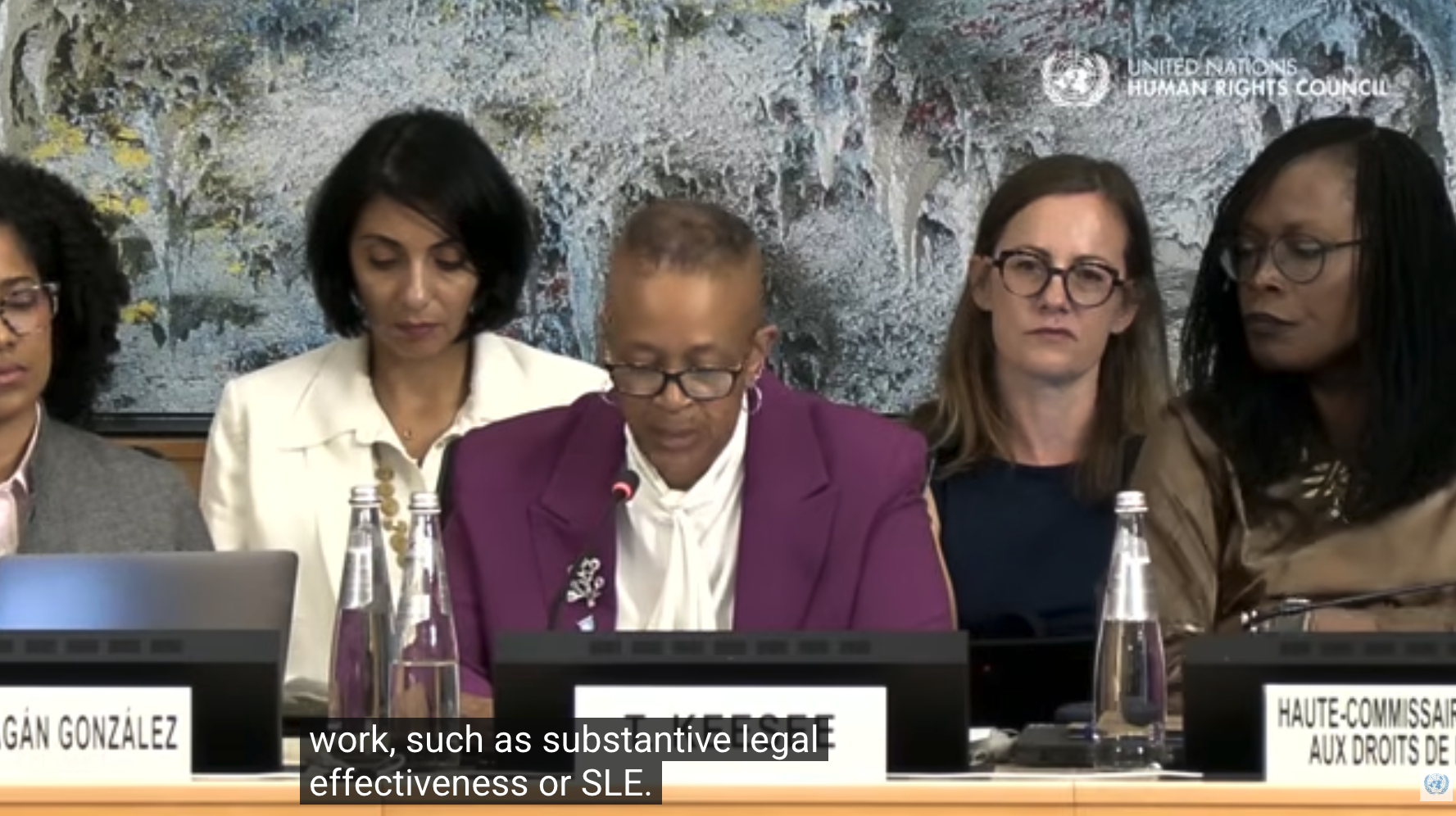
Irehobhude O. Iyioha is an Associate Professor, the inaugural Hon. Selwyn Romilly UBC Professor of Race and Access to Justice at the Peter A. Allard School of Law, University of British Columbia, and the UNESCO Chair on Health, Race and Human Rights. She is also a Full Professor, adj. in the Faculty of Medicine and Dentistry’s Dossetor Centre for Health Ethics at the University of Alberta, a Visiting Professor at Osgoode Hall Law School, York University, where she teaches in the Osgoode PD Master of Laws Program and, most recently, a Faculty Associate at the Department of Philosophy at Harvard University. She is the recipient of numerous awards for her scholarship, teaching, and service, including the World Congress on Medical Law Award issued by the World Association for Medical Law for her formative work on legal effectiveness, the Canadian Association of Law Teachers (CALT) Award for Scholarly Work that Makes a Substantial Contribution to Legal Literature for her theory of Substantive Legal Effectiveness (SLE) and, most recently, the King Charles III Coronation Medal for “pioneer[ing] transformative programs supporting Black students, professionals and academics while advancing equity, education and justice for marginalized communities globally”.
Newsletter

Enter your email below to subscribe to the newsletter.